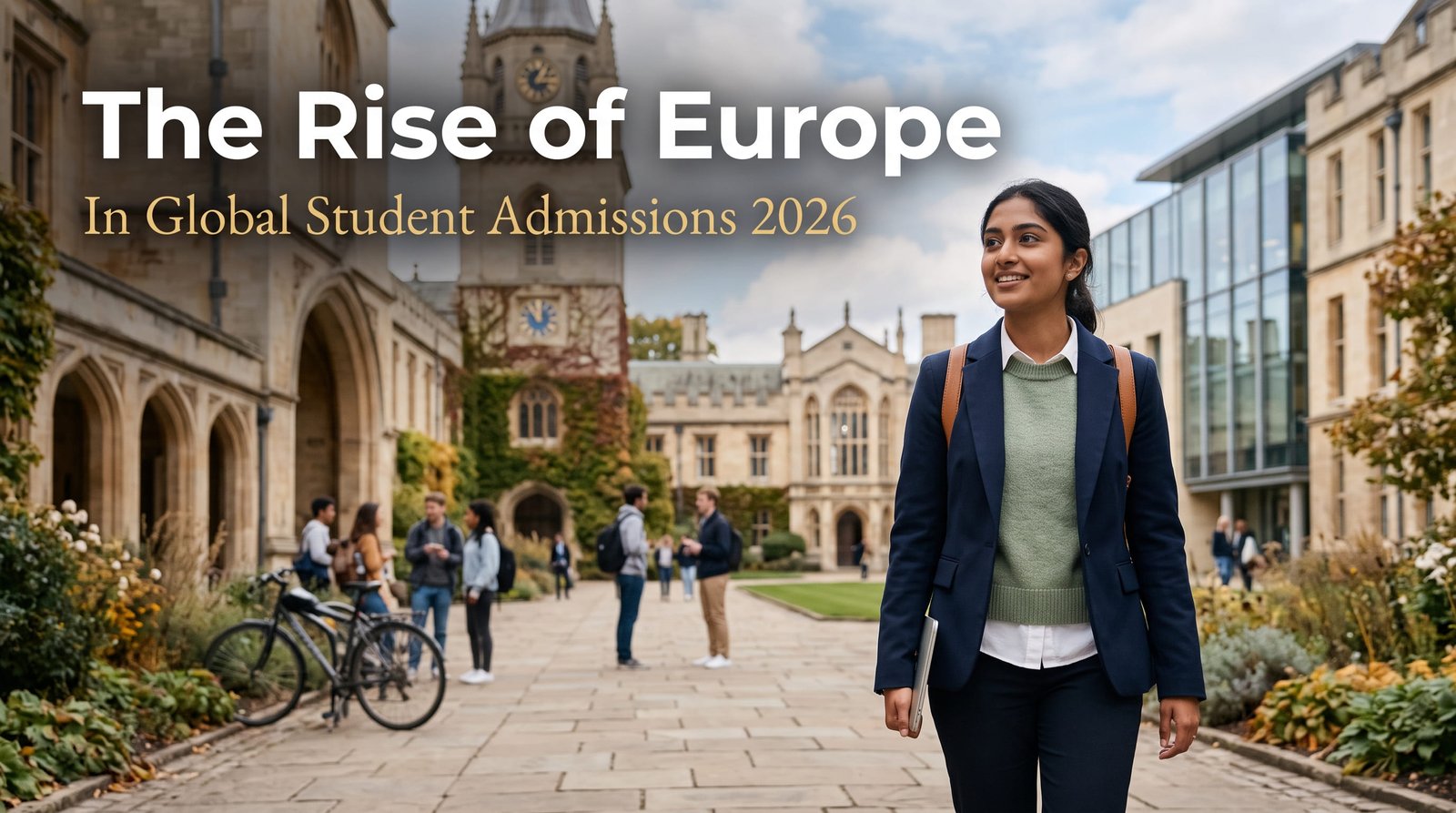
A shift to Europe is something that most people advising students still underestimate. This needs to change for the betterment of students.
There is a conversation happening in international education that many advisors are only half-hearing.
For a long time, the map of preferred study destinations looked relatively stable. Students from Bangladesh and similar markets were guided toward a short list of English-speaking countries. The United Kingdom, the United States, Australia and Canada were the established giants. Europe existed on the edge of that map – interesting, sometimes more affordable, but rarely central.
That positioning is becoming harder to defend
Over the past two decades, the number of fully English-taught degree programmes across Europe has increased more than tenfold. There are now over 8,000 such programmes. In Germany, the international student population has almost doubled in ten years. These figures point to a bigger change in supply and demand.
Students themselves are approaching the decision differently. Nowadays, Gen Z students are more comparative. They weigh career outcomes, living costs, and long-term mobility alongside university rankings. Destination branding still carries weight, but it no longer decides the shortlist on its own.
This is particularly noticeable among high-performing applicants. Names that once sat outside the main conversation, like Bocconi for business and economics in Italy, Aristotle University of Thessaloniki in Greece or Sciences Po for social sciences in France, now appear alongside traditional targets in the United States and the United Kingdom. For these students, Europe is not a backup plan. It is part of the opening discussion.
The challenge is that greater access has not removed complexity. Academic structures, assessment methods, and professional recognition still vary significantly between countries. A student may see only “Europe.” A student advisor needs to understand the differences between systems.
Dr Melissa Morrison, an industry leader in international admissions, points out a defining trait of the modern student: “The applicant considering Europe today is more comparative, more outcome-focused, and less likely to be persuaded by destination branding alone.” They are asking the tough, practical questions. Where can I actually build a future? What is the true cost of living? How does the system support my life after graduation?.
Ujjol Mia, CEO of Aspire Global Pathways, shares a similar view from the ground: “We see more families asking serious questions about European universities. The ones who succeed are those who receive clear, accurate advice rather than general impressions. Europe rewards preparation.”
For education consultants and institutions working with Bangladeshi students, the message is absolutely practical. Europe now belongs in every thorough admissions conversation. Treating it as secondary risks under-serving students who are already looking further and thinking more carefully about their futures.
European universities belong in every admissions conversation. The new generation is a global one, and the industry must match their ambition.
The new map of global education has been drawn. It is time to find your place on it. Ready to explore your European options? Speak to the experts at Aspire Global Pathways today for free.