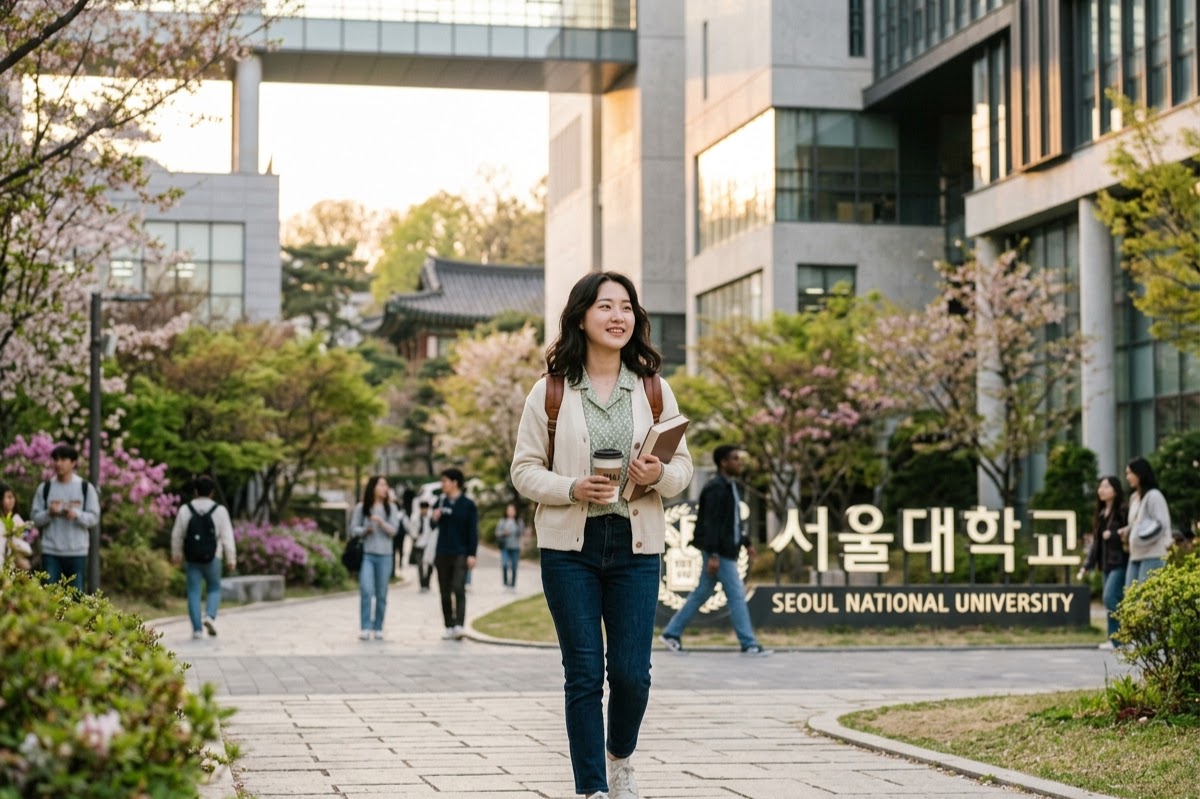
Look, I will be completely honest with you. A few years ago, coming to South Korea was mostly about K-Pop, K-Dramas, and short-term exchange programs. But in 2026, it has […]
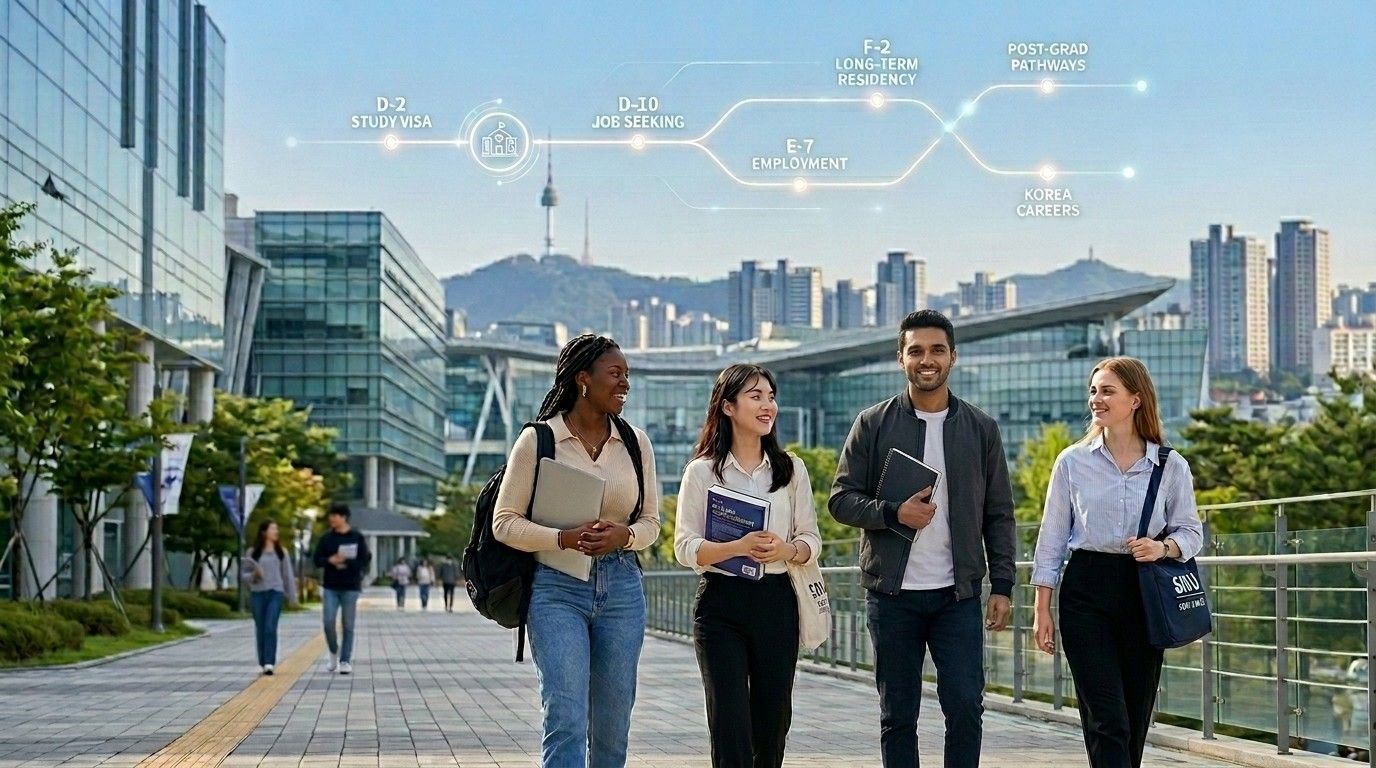
Look, I will be completely honest with you. A few years ago, coming to South Korea was mostly about K-Pop, K-Dramas, and short-term exchange programs. But in 2026, it has […]

If you’re considering South Korean universities, you’re making one of the smartest study-abroad decisions right now. While everyone’s fighting for spots in the UK, US, or Australia, South Korea is […]
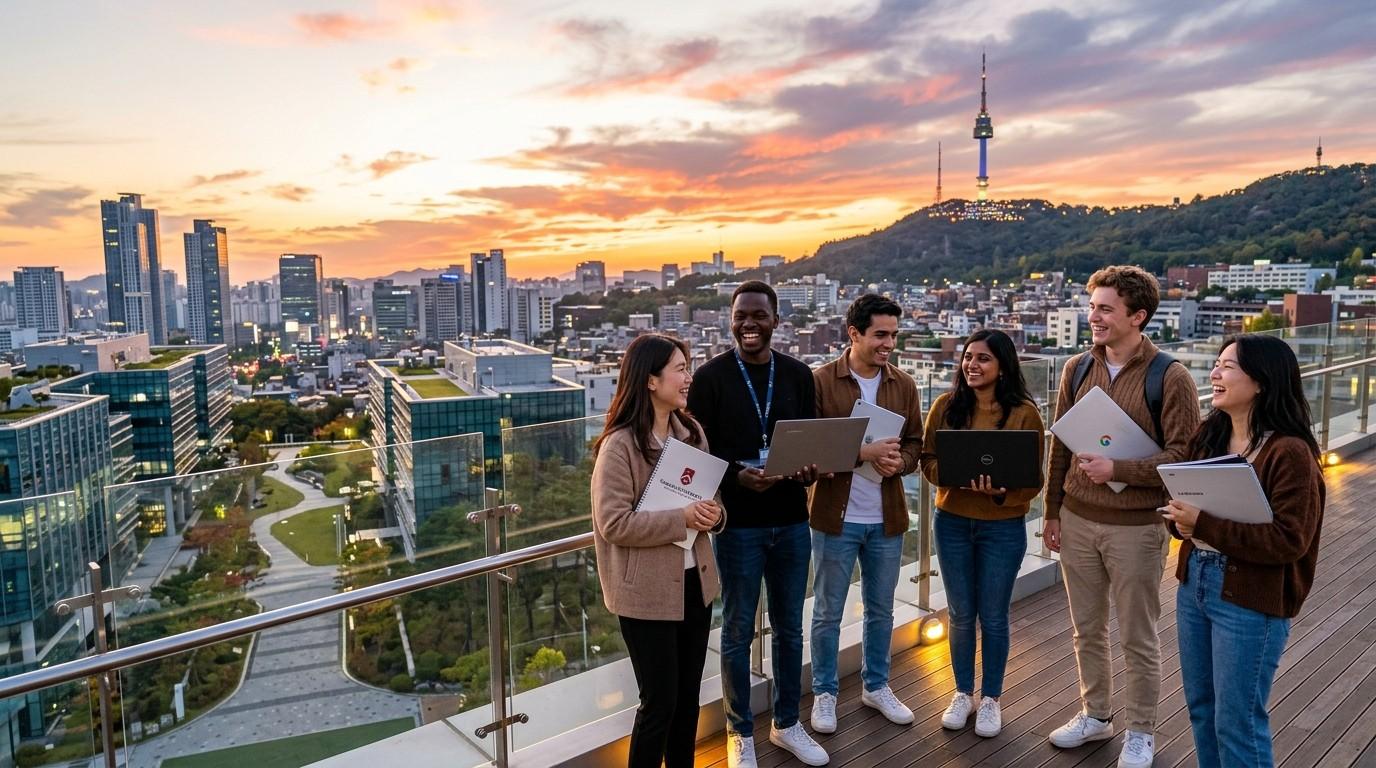
Forget what you know about studying abroad. While traditional Western destinations are tightening their borders, a new academic powerhouse has risen steadily. If you are planning your future abroad, deciding […]
Capital:
Seoul
Population:
51.6 million
International Students:
314,397
Universities:
370+
Currency:
South Korean Won (KRW)
Capital:
Seoul
International Students
314,397
Population
51.6 million
Universities
370+

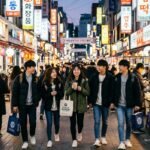


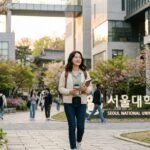
South Korea isn’t just the land of K-pop, K-dramas, and Korean BBQ. It’s also home to some of Asia’s most innovative universities, world-class education and one of the most generous scholarship programs for international students. With the Korean government’s ambitious “Study Korea 300K” initiative aiming to attract 300,000 international students, this is the best time to consider studying in South Korea.
It offers international students a unique blend of cutting-edge engineering, business programs, and rich cultural immersion. South Korea is an ideal destination providing top-tier academic excellence combined with surprisingly affordable education costs. This comprehensive guide covers everything you need to know about studying in South Korea – from tuition fees and scholarships to work opportunities and visa requirements.
World-Class Universities at Affordable Costs
South Korea consistently ranks among the world’s top education systems. The country has multiple universities in the global top 100 rankings. What makes studying in South Korea truly attractive is the combination of world-class education with affordable tuition fees compared to Western countries. While universities in the US or UK charge $20,000-$50,000 annually, South Korea’s tuition ranges from ₩3,000,000-₩8,000,000 per year ($2,200-$6,000 USD) at most universities.
Technology Hub & Innovation Leader
South Korea is home to global tech giants like Samsung, LG, Hyundai, and SK. These are companies that recruit heavily from Korean universities. The country invests heavily in R&D, spending 5.13% of GDP on research and development (second-highest rate globally).
For international students studying engineering, computer science, or technology-related fields, this means access to cutting-edge facilities, industry partnerships, and internship opportunities at top companies.
Global Korea Scholarship (GKS) – Fully Funded
The Korean government’s flagship scholarship program, GKS (formerly KGSP), is one of the world’s most generous fully-funded scholarships for international students. In 2026, the program will award around 2,200 scholarships covering:
Full tuition fees
₩900,000/month living allowance ($675 USD) (higher for research programs)
Round-trip airfare
Korean language training (1 year)
Medical insurance
Settlement allowance
The GKS scholarship essentially allows international students to study in South Korea with zero tuition.
K-Culture Global Influence
The worldwide popularity of Korean culture – from BTS and BLACKPINK to Netflix hits like Squid Game and Crash Landing on You has made South Korea one of the most culturally appealing study destinations. International students studying in South Korea experience Korean culture firsthand while improving their Korean language skills. This increasingly opens career opportunities in entertainment, media, and international business.
Earn While You Study
International students can easily support themselves while studying. With a D-2 visa, you’re allowed to work up to 25 hours per week during semesters and full-time during vacations. Popular part-time jobs like English tutoring, cafe work, and translation pay around $7.44 per hour, which is enough to comfortably cover monthly living expenses in most cities.
Safe and Welcoming Environment
South Korea consistently ranks as one of the world’s safest countries, with extremely low crime rates. The country has excellent public transportation (including one of the world’s fastest average internet speeds at 200+ Mbps), universal healthcare, and a welcoming attitude toward international students.
South Korean universities typically offer two main intakes for international students.
Application Period: September – November (previous year)
Notification: December – January
Classes Begin: Early March
The Spring intake is the primary intake for most Korean universities and aligns with the Korean academic calendar. This is when the largest number of students enrol.
Application Period: April – June
Notification: July – August
Classes Begin: Early September
The Fall intake is the secondary intake, suitable for international students whose academic calendars align better with September starts.
Pro Tip: Start your application process 6-8 months before your intended intake to maximise scholarship opportunities and secure accommodation.
South Korean universities excel in several fields that attract international students.
Computer Science & AI
Electrical & Electronic Engineering
Chemical Engineering
International Business
MBA programs
Finance & Economics
Marketing
Korean Language programs (TOPIK preparation)
Korean Studies
East Asian Studies
Fashion Design
Industrial Design
Film & Media Studies
Biotechnology
Chemistry
Physics
Life Sciences
Seoul National University (SNU)
#41 QS World Rankings 2026
Korea’s most prestigious university
Strong in all disciplines
Located in Seoul
KAIST
#47 QS World Rankings 2026
Top engineering & technology university in Korea
English-taught programs
Located in Daejeon
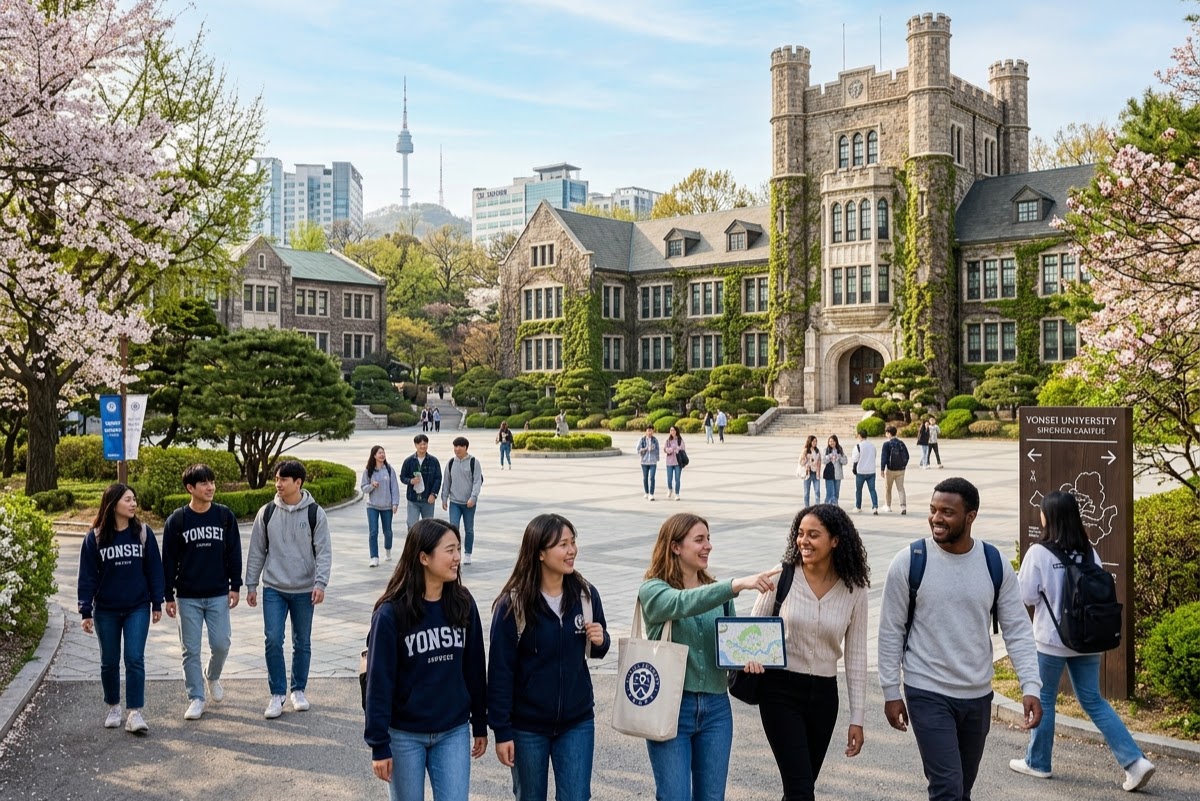
Yonsei University
#76 QS World Rankings 2026
Private research university
Underwood International College (English-taught)
Located in Seoul
Jeonbuk National University (JBNU)
Affordable tuition fees
Up to 100 % Scholarships
Easier part-time job access
Strong Global recognition
Up to 100 % Scholarships
Perfect balance of study plus life
Growing international programs
Internships and placement options
Hanyang University
Known for engineering excellence
ERICA campus focuses on industry collaboration
Strong entrepreneurship programs
Ewha Womans University
Leading women’s university (co-ed graduate programs)
Strong in humanities, arts, and education
Beautiful campus in Seoul
There are generous scholarship options for international students in South Korea. Here are some of the top ones.
It is the most prestigious and comprehensive scholarship for studying in South Korea.
Coverage:
100% tuition fees
₩900,000/month ($675 USD) living allowance
Round-trip airfare
Korean language training (1 year for degree students)
Medical insurance
₩200,000 settlement allowance
Eligibility:
Non-Korean citizen (both parents should also be non-Korean)
Under 25 years (undergraduate) / Under 40 years (postgraduate)
Meet minimum GPA requirements (80%+ or equivalent)
Application Tracks
Embassy Track: Apply through the Korean embassy in your country
University Track: Apply directly to participating Korean universities
2026 Allocation: 2,200 scholarships (800 Embassy Track + 1,400 University Track)
It covers partial tuition support for international students studying at Korean universities.
Coverage:
Up to ₩4,000,000/year tuition reduction
Based on financial need and academic merit
Most Korean universities offer merit-based scholarships for international students. A few examples are:
Yonsei University
50-100% tuition waivers based on entry exam scores
Additional merit scholarships for high performers
Korea University
International Student Scholarships: 25-100% tuition
Presidential Scholarship for top performers
SKKU (Sungkyunkwan University)
Global Scholarship: 50-100% tuition plus living allowance
Samsung Scholarship (for science/engineering students)
Korea Foundation Fellowship: For graduate students in humanities/social sciences
POSCO TJ Park Foundation: For science/engineering students
Korea Research Foundation: For research-focused graduate students
Pro Tip: Apply for the GKS scholarship first (highest benefit), then university scholarships as backup options.
National/Public Universities
Undergraduate: ₩2,000,000-₩5,500,000/semester ($1,500-$3,700 USD)
Postgraduate: ₩2,500,000-₩6,000,000/semester ($1,850-$4,500 USD)
Private Universities
Undergraduate: ₩4,000,000-₩8,000,000/semester ($3,000-$6,000 USD)
Graduate: ₩5,000,000-₩10,000,000/semester ($3,700-$7,500 USD)
Note: Medical and engineering programs typically fall on the higher end of the fee range.
South Korea: $2,500-$10,000/year
USA: $20,000-$60,000/year
UK: $15,000-$35,000/year
Australia: $18,000-$40,000/year
South Korea offers exceptional value for international students seeking quality education at affordable costs.
Application Fees: ₩50,000-₩150,000 ($35-$110 USD) per university application.
Seoul (Most Expensive)
Accommodation: ₩400,000-₩700,000 ($300-$525)
Food: ₩300,000-₩500,000 ($225-$375)
Transportation: ₩55,000 ($40) with a student pass
Phone/Internet: ₩40,000-₩60,000 ($30-$45)
Health Insurance (NHIS): ₩40,000 ($30)
Miscellaneous: ₩100,000-₩200,000 ($75-$150)
Total Seoul Cost: ₩935,000-₩1,655,000/month ($700-$1,240 USD)
Regional Cities (Busan, Daejeon, Daegu)
Accommodation: ₩250,000-₩500,000 ($185-$375)
Food: ₩250,000-₩400,000 ($185-$300)
Transportation: ₩40,000 ($30)
Phone/Internet: ₩35,000-₩50,000 ($26-$37)
Health Insurance: ₩40,000 ($30)
Miscellaneous: ₩80,000-₩150,000 ($60-$112)
Total Regional Cost: ₩695,000-₩1,180,000/month ($520-$885 USD)
Annual Total Living Costs
Seoul: ₩11,220,000-₩19,860,000 ($8,400-$14,880 USD)
Regional: ₩8,340,000-₩14,160,000 ($6,240-$10,620 USD)
Choose university dormitories: Cheapest accommodation option (₩200,000-₩400,000/month)
Cook at home: Korean groceries are affordable; eating out daily is expensive
Use student discounts: Museums, transport, and cinemas offer student rates
Shop at traditional markets: Cheaper than supermarkets for fresh produce
Use the T-Money card: Discounted public transport rates
Undergraduate Programs:
High school completion certificate (12 years of education)
Minimum GPA: 60-80% (varies by university)
Some programs require entrance exams
Postgraduate Programs (Master’s/PhD):
Bachelor’s degree (for Master’s) / Master’s degree (for PhD)
Minimum GPA of 2.5/4.0 or equivalent
Research proposal (for PhD applicants)
TOPIK (Test of Proficiency in Korean) Level 3 minimum (Level 4+ preferred)
Some universities offer conditional admission with language training
For English-Taught Programs
IELTS: 5.5-6.5 overall
TOEFL iBT: 71-80
TOEIC: 700+ (some universities)
Native English speakers may be exempt
Language Exemptions:
Previous education conducted entirely in English
Citizenship from English-speaking countries (varies by university)
Completed application form
Personal statement / Study plan
Academic transcripts (official, translated if necessary)
Graduation certificates
Passport copy
Letters of recommendation (2-3)
Language proficiency test scores
Financial proof documents
Health certificate
Portfolio (for arts/design programs)
Important: All documents not in the Korean or English language must be officially translated and notarised.
International students in South Korea on a D-2 (student) visa can work part-time with proper permission from immigration authorities.
Work Hour Limits
Up to 25 hours/week during the semester and unlimited during vacations, with a minimum Wage of ₩9,860/hour ($7.44 USD)
Typical Part-Time Jobs for International Students
English tutoring: ₩15,000-₩30,000/hour
Cafe/restaurant work: ₩10,000-₩12,000/hour
Convenience store: ₩9,860-₩11,000/hour
University library/admin: ₩10,000-₩13,000/hour
Translation/interpretation: ₩20,000-₩40,000/hour
Monthly Part-Time Earnings: ₩900,000-₩1,400,000 ($750-$1100 USD) working 25 hours/week.
Must complete at least one semester of study before starting work
Obtain permission from the university’s international office
Register with the immigration office
Maintain satisfactory academic performance
Prohibited Work: Entertainment venues, construction, manufacturing (restricted for student permits)
D-10 Job Seeker Visa
International students who graduate from Korean universities can apply for a D-10 job search visa valid for up to 3 years to find employment in South Korea.
E-7 Skilled Worker Visa
Graduates who secure employment can transition to an E-7 visa, allowing legal work in their field of expertise.
Korean companies actively recruit international graduates, especially in:
IT/Software Development
Engineering
Business/Marketing (for those with Korean language skills)
Education (English teaching)
Engineering: ₩35,000,000-₩45,000,000/year ($26,000-$34,000)
IT/Software: ₩38,000,000-₩50,000,000/year ($28,500-$37,500)
Business/Finance: ₩30,000,000-₩40,000,000/year ($22,500-$30,000)
While many programs are taught in English, learning Korean significantly enhances your experience. You will have better part-time job opportunities, easier daily life navigation, deeper cultural integration and stronger friendship connections with Korean students.
Resources For Learning Korean Language: Free university Korean language programs (for degree students), TOPIK, preparation courses, Language exchange programs
Useful Apps: Talk to Me in Korean, How to Study Korean
Koreans respect hierarchy. Older students and juniors have distinct relationships. Additionally, they have a group study culture. Many courses emphasise teamwork and group projects. Active participation is highly valued. Unlike some Asian education systems, Korean classes encourage questions and discussion. Universities have major festivals in the spring and fall, so try to attend them.
Initial setup costs can be around ₩500,000-₩1,000,000 ($375-$750) for bedding, kitchenware, deposits, etc. Keep in mind the seasonal expenses since winter heating can add ₩50,000-₩100,000/month. Korean university culture includes frequent group dining, which can add a little extra to your budget.
Getting an NHIS (National Health Insurance) is mandatory for all international students (₩40,000/month). It covers hospital visits, prescriptions, and basic dental (30-60% co-pay).
The good thing is that most campuses have on-site medical facilities.
T-Money card: Essential for subway, bus, and even some taxis
Student discounts: Available on most public transport
Bike-friendly: Many universities have bike-sharing programs
KTX (high-speed rail): Affordable weekend travel across Korea
Apply early for the university dormitory since spots are limited and in high demand. Otherwise, you can get small private rooms (₩300,000-₩500,000/month, utilities included) or share houses, which are popular with international students and offer more space. You can also rent studio apartments, which cost around ₩500,000-₩800,000/month plus a deposit.
An Alien Registration Card (ARC) is required to open a bank account.
Popular banks for international students: Woori Bank, Shinhan Bank, KB Kookmin Bank
Mobile banking apps: Kakaobank, Toss (convenient for transfers).
Prepaid SIMs are available at convenience stores
Contract plans: Require ARC, offer better rates
Major carriers: SK Telecom, KT, LG U+
Here is a step-by-step application process you can follow.
Identify programs matching your interests
Check language requirements
Review scholarship deadlines
Compare tuition and living costs
Request official transcripts
Secure letters of recommendation
Take language proficiency tests (TOPIK, IELTS, TOEFL)
Write a personal statement
Get documents translated and notarised
GKS scholarship (if eligible): September-March, depending on track
University-specific scholarships: Check individual deadlines
Submit scholarship applications before university applications
Spring intake: Apply September-November
Fall intake: Apply April-June
Pay application fees
Submit all documents online or by mail
Admission notifications: December-January (Spring) / July-August (Fall)
Accept the offer within the deadline
Pay tuition deposit if required
Receive a Certificate of Admission from the university
Complete visa application at the Korean embassy/consulate
Submit required documents and fees
Processing time: Usually 1-4 weeks
Apply for university dormitory (if available)
Book flights
Arrange airport pickup
Join the university’s international student orientation group
Attend mandatory orientation
Register for courses
Apply for an Alien Registration Card (ARC) within 90 days
Open a bank account
Get a Korean phone number
Health insurance enrollment (NHIS)
University ID card
Library access
Student facilities orientation
This is everything you need to know about studying in South Korea. Need any specific information? Contact AGP.
Ready to start your exciting South Korean education journey? At Aspire Global Pathways (AGP), we’ve helped hundreds of students successfully navigate the South Korean university application process, from choosing the right program to securing scholarships and completing enrollment. Contact AGP today for your Free South Korea study consultation!
World-Class Universities at Affordable Costs
South Korea consistently ranks among the world’s top education systems. The country has multiple universities in the global top 100 rankings. What makes studying in South Korea truly attractive is the combination of world-class education with affordable tuition fees compared to Western countries. While universities in the US or UK charge $20,000-$50,000 annually, South Korea’s tuition ranges from ₩3,000,000-₩8,000,000 per year ($2,200-$6,000 USD) at most universities.
Technology Hub & Innovation Leader
South Korea is home to global tech giants like Samsung, LG, Hyundai, and SK. These are companies that recruit heavily from Korean universities. The country invests heavily in R&D, spending 5.13% of GDP on research and development (second-highest rate globally).
For international students studying engineering, computer science, or technology-related fields, this means access to cutting-edge facilities, industry partnerships, and internship opportunities at top companies.
Global Korea Scholarship (GKS) – Fully Funded
The Korean government’s flagship scholarship program, GKS (formerly KGSP), is one of the world’s most generous fully-funded scholarships for international students. In 2026, the program will award around 2,200 scholarships covering:
Full tuition fees
₩900,000/month living allowance ($675 USD) (higher for research programs)
Round-trip airfare
Korean language training (1 year)
Medical insurance
Settlement allowance
The GKS scholarship essentially allows international students to study in South Korea with zero tuition.
K-Culture Global Influence
The worldwide popularity of Korean culture – from BTS and BLACKPINK to Netflix hits like Squid Game and Crash Landing on You has made South Korea one of the most culturally appealing study destinations. International students studying in South Korea experience Korean culture firsthand while improving their Korean language skills. This increasingly opens career opportunities in entertainment, media, and international business.
Earn While You Study
International students can easily support themselves while studying. With a D-2 visa, you’re allowed to work up to 25 hours per week during semesters and full-time during vacations. Popular part-time jobs like English tutoring, cafe work, and translation pay around $7.44 per hour, which is enough to comfortably cover monthly living expenses in most cities.
Safe and Welcoming Environment
South Korea consistently ranks as one of the world’s safest countries, with extremely low crime rates. The country has excellent public transportation (including one of the world’s fastest average internet speeds at 200+ Mbps), universal healthcare, and a welcoming attitude toward international students.
South Korean universities typically offer two main intakes for international students.
Application Period: September – November (previous year)
Notification: December – January
Classes Begin: Early March
The Spring intake is the primary intake for most Korean universities and aligns with the Korean academic calendar. This is when the largest number of students enrol.
Application Period: April – June
Notification: July – August
Classes Begin: Early September
The Fall intake is the secondary intake, suitable for international students whose academic calendars align better with September starts.
Pro Tip: Start your application process 6-8 months before your intended intake to maximise scholarship opportunities and secure accommodation.
South Korean universities excel in several fields that attract international students.
Computer Science & AI
Electrical & Electronic Engineering
Chemical Engineering
International Business
MBA programs
Finance & Economics
Marketing
Korean Language programs (TOPIK preparation)
Korean Studies
East Asian Studies
Fashion Design
Industrial Design
Film & Media Studies
Biotechnology
Chemistry
Physics
Life Sciences
Seoul National University (SNU)
#41 QS World Rankings 2026
Korea’s most prestigious university
Strong in all disciplines
Located in Seoul
KAIST
#47 QS World Rankings 2026
Top engineering & technology university in Korea
English-taught programs
Located in Daejeon
Yonsei University
#76 QS World Rankings 2026
Private research university
Underwood International College (English-taught)
Located in Seoul
Jeonbuk National University (JBNU)
Affordable tuition fees
Up to 100 % Scholarships
Easier part-time job access
Strong Global recognition
Up to 100 % Scholarships
Perfect balance of study plus life
Growing international programs
Internships and placement options
Hanyang University
Known for engineering excellence
ERICA campus focuses on industry collaboration
Strong entrepreneurship programs
Ewha Womans University
Leading women’s university (co-ed graduate programs)
Strong in humanities, arts, and education
Beautiful campus in Seoul

There are generous scholarship options for international students in South Korea. Here are some of the top ones.
It is the most prestigious and comprehensive scholarship for studying in South Korea.
Coverage:
100% tuition fees
₩900,000/month ($675 USD) living allowance
Round-trip airfare
Korean language training (1 year for degree students)
Medical insurance
₩200,000 settlement allowance
Eligibility:
Non-Korean citizen (both parents should also be non-Korean)
Under 25 years (undergraduate) / Under 40 years (postgraduate)
Meet minimum GPA requirements (80%+ or equivalent)
Application Tracks
Embassy Track: Apply through the Korean embassy in your country
University Track: Apply directly to participating Korean universities
2026 Allocation: 2,200 scholarships (800 Embassy Track + 1,400 University Track)
It covers partial tuition support for international students studying at Korean universities.
Coverage:
Up to ₩4,000,000/year tuition reduction
Based on financial need and academic merit
Most Korean universities offer merit-based scholarships for international students. A few examples are:
Yonsei University
50-100% tuition waivers based on entry exam scores
Additional merit scholarships for high performers
Korea University
International Student Scholarships: 25-100% tuition
Presidential Scholarship for top performers
SKKU (Sungkyunkwan University)
Global Scholarship: 50-100% tuition plus living allowance
Samsung Scholarship (for science/engineering students)
Korea Foundation Fellowship: For graduate students in humanities/social sciences
POSCO TJ Park Foundation: For science/engineering students
Korea Research Foundation: For research-focused graduate students
Pro Tip: Apply for the GKS scholarship first (highest benefit), then university scholarships as backup options.
National/Public Universities
Undergraduate: ₩2,000,000-₩5,500,000/semester ($1,500-$3,700 USD)
Postgraduate: ₩2,500,000-₩6,000,000/semester ($1,850-$4,500 USD)
Private Universities
Undergraduate: ₩4,000,000-₩8,000,000/semester ($3,000-$6,000 USD)
Graduate: ₩5,000,000-₩10,000,000/semester ($3,700-$7,500 USD)
Note: Medical and engineering programs typically fall on the higher end of the fee range.
South Korea: $2,500-$10,000/year
USA: $20,000-$60,000/year
UK: $15,000-$35,000/year
Australia: $18,000-$40,000/year
South Korea offers exceptional value for international students seeking quality education at affordable costs.
Application Fees: ₩50,000-₩150,000 ($35-$110 USD) per university application.
Seoul (Most Expensive)
Accommodation: ₩400,000-₩700,000 ($300-$525)
Food: ₩300,000-₩500,000 ($225-$375)
Transportation: ₩55,000 ($40) with a student pass
Phone/Internet: ₩40,000-₩60,000 ($30-$45)
Health Insurance (NHIS): ₩40,000 ($30)
Miscellaneous: ₩100,000-₩200,000 ($75-$150)
Total Seoul Cost: ₩935,000-₩1,655,000/month ($700-$1,240 USD)
Regional Cities (Busan, Daejeon, Daegu)
Accommodation: ₩250,000-₩500,000 ($185-$375)
Food: ₩250,000-₩400,000 ($185-$300)
Transportation: ₩40,000 ($30)
Phone/Internet: ₩35,000-₩50,000 ($26-$37)
Health Insurance: ₩40,000 ($30)
Miscellaneous: ₩80,000-₩150,000 ($60-$112)
Total Regional Cost: ₩695,000-₩1,180,000/month ($520-$885 USD)
Annual Total Living Costs
Seoul: ₩11,220,000-₩19,860,000 ($8,400-$14,880 USD)
Regional: ₩8,340,000-₩14,160,000 ($6,240-$10,620 USD)
Choose university dormitories: Cheapest accommodation option (₩200,000-₩400,000/month)
Cook at home: Korean groceries are affordable; eating out daily is expensive
Use student discounts: Museums, transport, and cinemas offer student rates
Shop at traditional markets: Cheaper than supermarkets for fresh produce
Use the T-Money card: Discounted public transport rates
Undergraduate Programs:
High school completion certificate (12 years of education)
Minimum GPA: 60-80% (varies by university)
Some programs require entrance exams
Postgraduate Programs (Master’s/PhD):
Bachelor’s degree (for Master’s) / Master’s degree (for PhD)
Minimum GPA of 2.5/4.0 or equivalent
Research proposal (for PhD applicants)
TOPIK (Test of Proficiency in Korean) Level 3 minimum (Level 4+ preferred)
Some universities offer conditional admission with language training
For English-Taught Programs
IELTS: 5.5-6.5 overall
TOEFL iBT: 71-80
TOEIC: 700+ (some universities)
Native English speakers may be exempt
Language Exemptions:
Previous education conducted entirely in English
Citizenship from English-speaking countries (varies by university)
Completed application form
Personal statement / Study plan
Academic transcripts (official, translated if necessary)
Graduation certificates
Passport copy
Letters of recommendation (2-3)
Language proficiency test scores
Financial proof documents
Health certificate
Portfolio (for arts/design programs)
Important: All documents not in the Korean or English language must be officially translated and notarised.
International students in South Korea on a D-2 (student) visa can work part-time with proper permission from immigration authorities.
Work Hour Limits
Up to 25 hours/week during the semester and unlimited during vacations, with a minimum Wage of ₩9,860/hour ($7.44 USD)
Typical Part-Time Jobs for International Students
English tutoring: ₩15,000-₩30,000/hour
Cafe/restaurant work: ₩10,000-₩12,000/hour
Convenience store: ₩9,860-₩11,000/hour
University library/admin: ₩10,000-₩13,000/hour
Translation/interpretation: ₩20,000-₩40,000/hour
Monthly Part-Time Earnings: ₩900,000-₩1,400,000 ($750-$1100 USD) working 25 hours/week.
Must complete at least one semester of study before starting work
Obtain permission from the university’s international office
Register with the immigration office
Maintain satisfactory academic performance
Prohibited Work: Entertainment venues, construction, manufacturing (restricted for student permits)
D-10 Job Seeker Visa
International students who graduate from Korean universities can apply for a D-10 job search visa valid for up to 3 years to find employment in South Korea.
E-7 Skilled Worker Visa
Graduates who secure employment can transition to an E-7 visa, allowing legal work in their field of expertise.
Korean companies actively recruit international graduates, especially in:
IT/Software Development
Engineering
Business/Marketing (for those with Korean language skills)
Education (English teaching)
Engineering: ₩35,000,000-₩45,000,000/year ($26,000-$34,000)
IT/Software: ₩38,000,000-₩50,000,000/year ($28,500-$37,500)
Business/Finance: ₩30,000,000-₩40,000,000/year ($22,500-$30,000)
While many programs are taught in English, learning Korean significantly enhances your experience. You will have better part-time job opportunities, easier daily life navigation, deeper cultural integration and stronger friendship connections with Korean students.
Resources For Learning Korean Language: Free university Korean language programs (for degree students), TOPIK, preparation courses, Language exchange programs
Useful Apps: Talk to Me in Korean, How to Study Korean
Koreans respect hierarchy. Older students and juniors have distinct relationships. Additionally, they have a group study culture. Many courses emphasise teamwork and group projects. Active participation is highly valued. Unlike some Asian education systems, Korean classes encourage questions and discussion. Universities have major festivals in the spring and fall, so try to attend them.
Initial setup costs can be around ₩500,000-₩1,000,000 ($375-$750) for bedding, kitchenware, deposits, etc. Keep in mind the seasonal expenses since winter heating can add ₩50,000-₩100,000/month. Korean university culture includes frequent group dining, which can add a little extra to your budget.
Getting an NHIS (National Health Insurance) is mandatory for all international students (₩40,000/month). It covers hospital visits, prescriptions, and basic dental (30-60% co-pay).
The good thing is that most campuses have on-site medical facilities.
T-Money card: Essential for subway, bus, and even some taxis
Student discounts: Available on most public transport
Bike-friendly: Many universities have bike-sharing programs
KTX (high-speed rail): Affordable weekend travel across Korea
Apply early for the university dormitory since spots are limited and in high demand. Otherwise, you can get small private rooms (₩300,000-₩500,000/month, utilities included) or share houses, which are popular with international students and offer more space. You can also rent studio apartments, which cost around ₩500,000-₩800,000/month plus a deposit.
An Alien Registration Card (ARC) is required to open a bank account.
Popular banks for international students: Woori Bank, Shinhan Bank, KB Kookmin Bank
Mobile banking apps: Kakaobank, Toss (convenient for transfers).
Prepaid SIMs are available at convenience stores
Contract plans: Require ARC, offer better rates
Major carriers: SK Telecom, KT, LG U+
Here is a step-by-step application process you can follow.
Identify programs matching your interests
Check language requirements
Review scholarship deadlines
Compare tuition and living costs
Request official transcripts
Secure letters of recommendation
Take language proficiency tests (TOPIK, IELTS, TOEFL)
Write a personal statement
Get documents translated and notarised
GKS scholarship (if eligible): September-March, depending on track
University-specific scholarships: Check individual deadlines
Submit scholarship applications before university applications
Spring intake: Apply September-November
Fall intake: Apply April-June
Pay application fees
Submit all documents online or by mail
Admission notifications: December-January (Spring) / July-August (Fall)
Accept the offer within the deadline
Pay tuition deposit if required
Receive a Certificate of Admission from the university
Complete visa application at the Korean embassy/consulate
Submit required documents and fees
Processing time: Usually 1-4 weeks
Apply for university dormitory (if available)
Book flights
Arrange airport pickup
Join the university’s international student orientation group
Attend mandatory orientation
Register for courses
Apply for an Alien Registration Card (ARC) within 90 days
Open a bank account
Get a Korean phone number
Health insurance enrollment (NHIS)
University ID card
Library access
Student facilities orientation
This is everything you need to know about studying in South Korea. Need any specific information? Contact AGP.
Ready to start your exciting South Korean education journey? At Aspire Global Pathways (AGP), we’ve helped hundreds of students successfully navigate the South Korean university application process, from choosing the right program to securing scholarships and completing enrollment. Contact AGP today for your Free South Korea study consultation!
Tuition fees range from $1,500-$4,500 per semester at public universities and $3,000-$7,500 at private ones. Total annual cost (tuition + living) is approximately $9,000-$19,000, depending on the city and lifestyle.
Yes. With a D-2 student visa, you can work up to 25 hours per week during semesters and full-time during vacations (after one semester). Minimum wage is around $7.44/hour.
The Global Korea Scholarship (GKS) is a fully-funded scholarship by the South Korean government. It covers full tuition, a monthly stipend, airfare, and insurance. In 2026, over 2,200 scholarships are available. Apply via Embassy Track or University Track between September and October.
Not always. Many universities offer fully English-taught programs, especially in master’s degrees. However, learning Korean (TOPIK Level 3+) improves daily life and job opportunities even in English programs.
Graduates can stay up to 3 years on a D-10 job-seeker visa. Many find jobs in IT, engineering, and business with average starting salaries of $22,500-$37,500 per year. Korean language skills significantly boost employment chances.