Planning to study in South Korea from Bangladesh after HSC 2027 is a very smart decision.
South Korea offers world-class education, renowned technology hubs and K-culture-filled streets. Over the last few years, it has quickly transformed into a dream destination for many Bangladeshi HSC graduates.
Over 300,000 international students are currently enrolled across Korean campuses in 2026. You will get access to top-tier research labs, ultra-safe campus living, generous scholarships, and a direct pathway into a global career.
Many Western countries require an expensive pre-university foundation year before you can enrol in their Bachelor’s program. But Korean universities accept the Bangladeshi 12-year Higher Secondary Certificate (HSC) directly into 4-year Bachelor’s degree programs.
You can choose to study in English (via IELTS) or explore Korean language (via TOPIK). This complete, updated 2027 guide explains admission requirements, realistic budget, scholarship secrets, and embassy visa steps clearly.
Why Should You Go for a Bachelors Degree in South Korea After HSC?
Choosing to study in South Korea from Bangladesh after High School gives you direct access to 4-year degree programs with world-class tech facilities and affordable tuition.
Many Bangladeshi HSC graduates are surprised to learn that South Korea does not force you through a costly foundation year. Since the Bangladeshi HSC (12 years of schooling) is recognised as complete high school education, you can jump straight into Year 1 of your undergraduate degree.
| WHY GEN-Z BANGLADESHI STUDENTS CHOOSE SOUTH KOREA | |
| Traditional Western Routes | South Korea Bachelor Pathway |
|
|
Furthermore, many Korean universities offer automatic fee reductions based on your initial IELTS or TOPIK score.
What Are the South Korea University Requirements for Bangladeshi Students?
Bangladeshi students are required to maintain a decent HSC GPA, proof of language proficiency, and clean financial records.
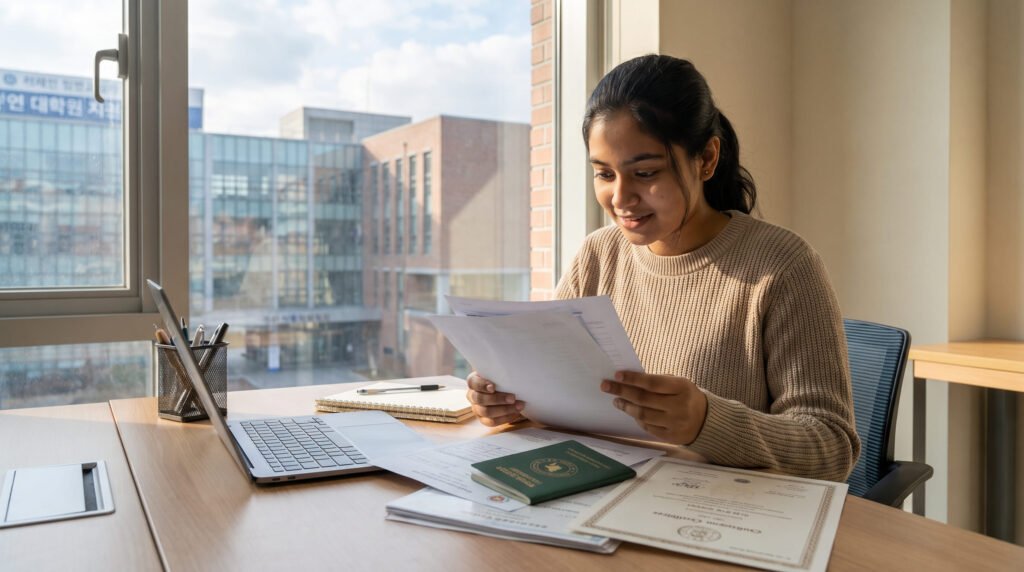
Korean admission boards evaluate your overall academic growth, consistency, and passion for your chosen major. Here is what you need to prepare:
Core South Korea Bachelor Requirements for Bangladeshi Students
- Academic GPA: Minimum HSC and SSC GPA of 3.00 to 3.50 out of 5.00 for general private universities; GPA 4.00 to 5.00 for top public institutions (such as Seoul National University, KAIST, or Yonsei University).
- English-Taught Track (IELTS): Overall score of 5.5 to 6.5 (no band below 5.5). Academic IELTS is widely accepted across global faculties like SolBridge International School of Business or Woosong University.
- Korean-Taught Track (TOPIK): TOPIK Level 3 or higher for direct undergraduate entry. If you don’t have TOPIK, you can take a 6-month to 1-year language foundation course on a D-4 visa first!
- Study Gap: Up to 2 years of gap after HSC is accepted if you present a clear personal statement or skill training certificates.
What Are the Primary Admission & Visa Routes for Bangladeshi Applicants?
Bangladeshi students can enter Korean higher education through two main entry pathways based on their current language background.
| SOUTH KOREA UNDERGRADUATE PATHWAYS (AFTER HSC) | |
| Direct D-2 Degree Visa Route |
|
| D-4 Language Trainee to D-2 Degree Route |
|
Your education counsellor will understand whether a direct English degree or a language-first foundation route aligns best with your long-term career goals in South Korea.
How to Study in South Korea for Free: GKS and University Scholarships
Securing scholarships to study in South Korea after 12th can reduce your tuition and living costs to zero.
If your goal is to learn how to study in South Korea for free, this is for you. South Korea offers some of the most generous funding in Asia for international undergraduates:
1. Global Korea Scholarship (GKS – Undergraduate)
The prestigious GKS scholarship funded by the Korean Government (NIIED) is the gold standard. It covers:
- 100% Full Tuition Waiver for 4 years of a bachelor’s degree.
- 1-Year Free Korean Language Training.
- Monthly Living Allowance (₩1,130,000 – 1,200,000 per month).
- Round-trip airfare and full medical insurance coverage.
- Eligibility: High school graduates under 25 years old with an HSC score of 80% (GPA 4.0/5.0+) or top 20% class ranking.
Want to get complete guidance for studying in South Korea? Sign up for a free 30-minute counselling session with a certified expert!
2. Automatic University Merit Scholarships
Even if you miss GKS, almost all private and public Korean universities award automatic 30% to 100% tuition waivers. It is based on your initial IELTS score or HSC GPA during your first semester. Maintaining a GPA of 3.0+ inside Korea keeps your scholarship active for all 4 years!
Cost to Study in South Korea From Bangladesh After HSC 2027
Understanding the real cost to study in South Korea from Bangladesh after HSC 2027 helps you plan a clear financial roadmap.
South Korea is significantly more budget-friendly than Western destinations like the USA, Australia, or Canada. Here is a realistic breakdown of expenses in Bangladeshi Taka (BDT) and Korean Won (KRW). The numbers are subject to open-market currency fluctuations.
| Expense Category | Estimated Amount In Korean Won (KRW) | Estimated Amount in Bangladeshi Taka (BDT) |
| Public University Tuition (Per Semester) | ₩2,500,000 – ₩4,000,000 | ৳2.3 Lakhs – ৳3.7 Lakhs |
| Private University Tuition (Per Semester) | ₩3,800,000 – ₩6,500,000 | ৳3.5 Lakhs – ৳6 Lakhs |
| On-Campus Dormitory (With Meal Plans) | ₩350,000 – ₩550,000 / month | ৳32,000 – ৳51,000 / month |
| Food, Transport & Personal Living | ₩400,000 – ₩600,000 / month | ৳37,000 – ৳55,000 / month |
| National Health Insurance (NHIS) | ₩76,000 / month | ৳7,000 / month |
Part-Time Earnings Potential in South Korea
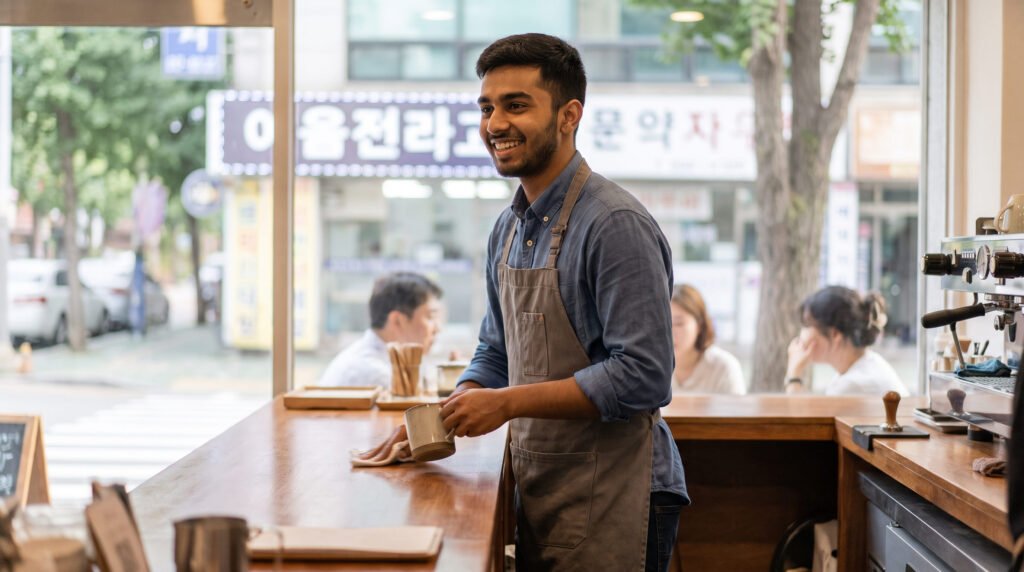
Under D-2 visa rules, international students can work 20 to 30 hours per week during study semesters and full-time during vacations. With South Korea’s minimum wage set at ₩10,700 per hour (৳993), students working part-time jobs can easily cover their monthly living and food expenses!
How to Get Your Korean Student Visa Without Document Errors?
Securing your Korean student visa requires a flawless Certificate of Admission (COA), verified bank solvency proof, and embassy medical clearances.
The Embassy of the Republic of Korea in Dhaka maintains precise verification steps to ensure applicants are genuine.
Essential Document Checklist for D-2 / D-4 Visa:
- Official Certificate of Admission (COA): Issued by your Korean university after tuition payment or scholarship award.
- Attested Academic Documents: SSC and HSC certificates and transcripts translated into English, notarised, and attested by the Ministry of Foreign Affairs (MOFA) in Dhaka.
- Bank Solvency Proof: Bank statement showing a balance of $10,000 to $20,000 USD (approx. ৳13.5 Lakhs to ৳22 Lakhs BDT) held in an approved bank for at least 28 days.
- Tuberculosis (TB) Test Certificate: Completed at an embassy-designated chest clinic in Dhaka.
- Notarised Family Sponsor Affidavit: Proving income source, tax filings, and relationship details.
Step-by-Step Application Roadmap for Bangladeshi HSC Graduates
Following a structured application timeline ensures you attend your Korean university campus without missing any deadlines.
- Step 1 – Profile Assessment: Evaluate your HSC GPA and language test scores with an expert advisor.
- Step 2 – Take IELTS or TOPIK: Aim for IELTS 5.5+ for English-medium tracks or a TOPIK level 3 or 4 score.
- Step 3 – Application Submission: Submit online applications directly to target Korean universities.
- Step 4 – Receive Certificate of Admission (COA): Pay the semester tuition deposit or confirm your GKS award.
- Step 5 – Bank Balance & TB Screening: Fulfil embassy financial proof rules and take your TB health test in Dhaka.
- Step 6 – Embassy Visa Submission: Submit your visa file to the South Korean Embassy in Dhaka, collect your visa sticker, and get ready to take off soon!
Start Your South Korean Journey with Total Confidence
Deciding to study in South Korea from Bangladesh after HSC 2027 opens amazing opportunities. You will get access to top-ranked education, futuristic career opportunities, and an unforgettable multicultural lifestyle.
Avoid false agency promises, organise your MOFA attestations carefully, and pick the right university pathway. Then your dream of studying in South Korea is perfectly on its track.
If you want clear, honest support for your South Korea plan, reach out to Aspire Global Pathways today. We offer free consultations so that you can take the next step with confidence.
Frequently Asked Questions (FAQs)
- Can I study in South Korea from Bangladesh after HSC without IELTS?
Yes! You can apply for a D-4 Korean Language Foundation program where IELTS is not mandatory. Alternatively, for direct D-2 degree entry, some universities accept a Medium of Instruction (MOI) certificate, though having an IELTS 5.5+ unlocks much higher scholarships.
- How much bank balance is required for a South Korean student visa in Dhaka?
The South Korean Embassy in Dhaka requires proof of funds ranging between $10,000 USD and $20,000 USD (approx. ৳13.5 Lakhs to ৳22 Lakhs BDT) maintained in a commercial bank account for at least 28 days.
- Are Bangladeshi students allowed to work part-time in South Korea?
Yes! D-2 student visa holders can legally work 20 to 30 hours per week during academic semesters and full-time (40+ hours/week) during official vacations.
- Is studying in South Korea safe for Bangladeshi students?
South Korea is consistently ranked among the top 5 safest nations globally. Campuses feature modern security, 24/7 CCTV, emergency call points, and dedicated international student support centres.
- What is the visa processing time for South Korea from Bangladesh?
University offer processing usually takes 3 to 5 weeks, while D-2/D-4 visa evaluation at the Korean Embassy in Dhaka typically takes 2 to 4 weeks after document submission.